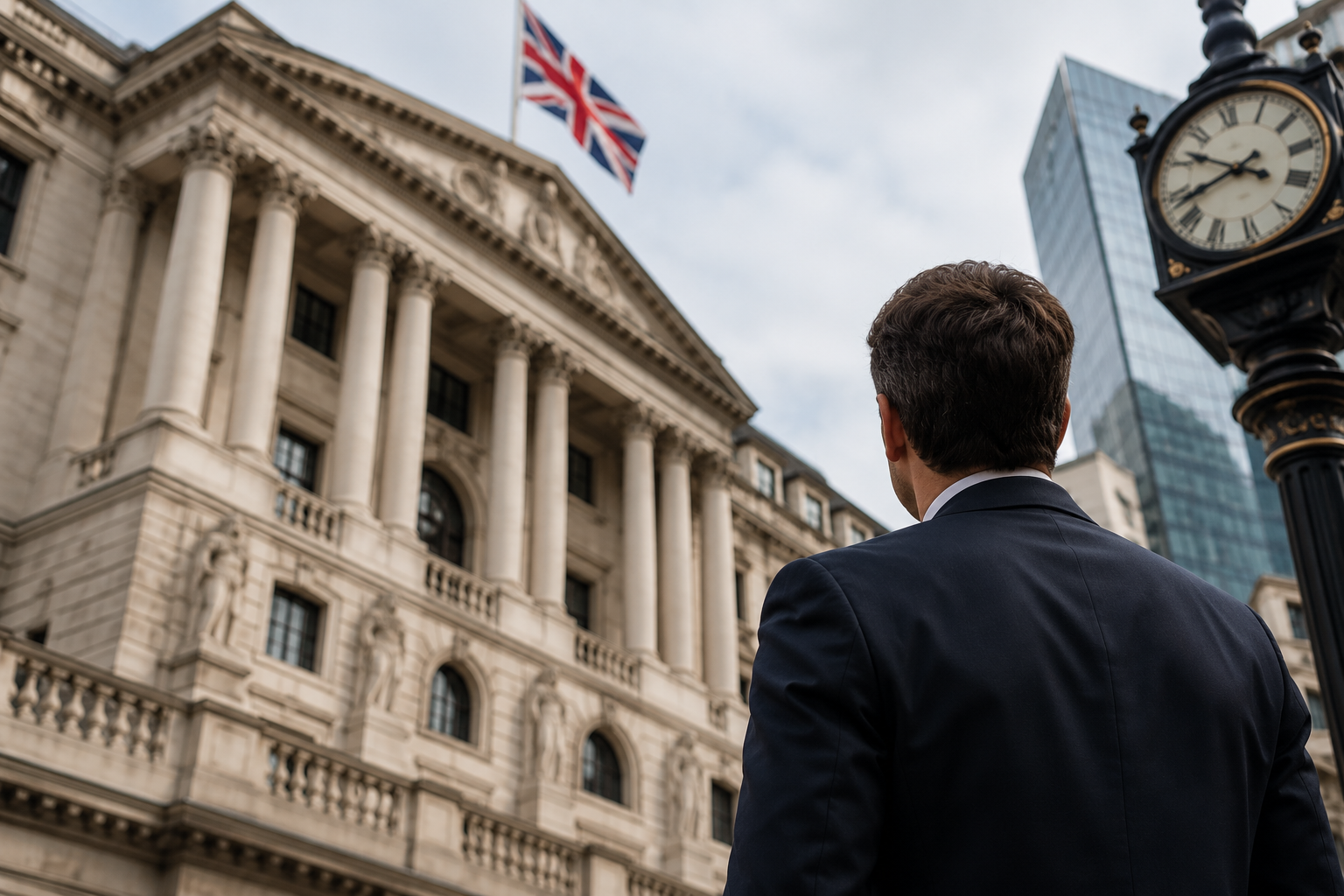
Summary of how business savings accounts work for UK limited companies in 2026
- A company can use easy access, notice or fixed accounts, each trading access to the money against the rate.
- Interest is paid without tax taken off. It counts as company profit and is charged at 19% to 25%, so a 4% account pays a main-rate company 3% after tax.
- A company cannot hold an ISA. The personal savings allowance is for individuals.
- Deposits are protected up to £120,000 for each eligible depositor with each authorised firm. Brands that share one banking licence share one limit.
- Matching cash to when it is needed can earn more than leaving it all in easy access. On the assumed rates in the example below it is £700 a year more on £120,000.
- The rates in the examples are assumptions, so check what each account pays today.
Most limited companies hold their spare cash in the current account they already have. A business savings account can pay interest on that cash. The catch is that more interest usually means less freedom to take the money out.
This page covers how the main account types work, how a company pays tax on the interest, and what protects the money if a bank fails. It names no providers and quotes no current rates because those change every week. The pound figures are arithmetic on assumed rates and are illustrations. The tax rates and protection limits come from GOV.UK and the Financial Services Compensation Scheme.
What is a business savings account?
A business savings account is a deposit account in the name of a company that pays interest on the balance. It sits alongside the company's current account and is used for cash the company does not need to spend day to day. A limited company is a separate legal person from its owners, so company cash belongs in a company account and not a personal one.
The interest is a return for lending the bank your money. The more freely you can get the money back, the less the bank will usually pay for it.
What types of business savings account can a company use?
There are three types. The table sets out how each one works.
| Type | Getting the money out | Rate | Suits |
|---|---|---|---|
| Easy access | Any time, usually online | Variable, so it can change | Cash you may need at short notice |
| Notice | After you give notice, typically 30 to 180 days | Often higher than easy access, but not always | Bills you can see coming, such as VAT or corporation tax |
| Fixed term | At the end of the term, typically one to five years. Early access may be refused or carry a penalty | Set for the whole term | Surplus cash you will not need for a while |
Some accounts need a minimum deposit and some pay a higher introductory rate for a set period. Read what the rate becomes when the introductory period ends.
Notice accounts used to pay clearly more than easy access ones. That is no longer reliable, so compare the actual rates before you give up access. For a fixed account, ask whether you can add money after you open it and what happens if you need the cash early.
How is interest on company savings taxed?
A bank pays a company its interest in full, with no tax taken off. The company then reports it. Interest counts as part of the company's profits and is charged to corporation tax at 19% on profits up to £50,000 and 25% on profits over £250,000, with marginal relief between the two. The tax is usually due nine months after the accounting period ends.
Worked example
What £100,000 in a 4% account is worth to a company after corporation tax
Company at 19%
- Deposit
- £100,000
- Interest at 4%
- £4,000
- Corporation tax at 19%
- £760
- Left after tax
- £3,240
3.24% a year after tax
Company at 25%
- Deposit
- £100,000
- Interest at 4%
- £4,000
- Corporation tax at 25%
- £1,000
- Left after tax
- £3,000
3.00% a year after tax
£760 to £1,000 of tax on £4,000 of interest
The example assumes a 4% rate. A saver who is an individual may get a personal savings allowance, and an individual can use an ISA. A company gets neither. ISAs are open to individuals, and the allowance is for people and not for companies. The company cash article compares leaving cash in a savings account with taking it out as a dividend or paying it into a pension.
Is a company's money protected if the bank fails?
Yes, up to a limit. The Financial Services Compensation Scheme protects deposits with UK banks, building societies and credit unions that are authorised in the UK. The limit is £120,000 for each eligible depositor with each authorised firm. It rose from £85,000 on 1 December 2025 and applies to firms that fail from that date. Some older guides still show the old figure.
The scheme generally protects a company's deposits whatever the size of the company. Most regulated financial services firms are not eligible depositors.
Check which brands share a licence. Brands that share one firm reference number are treated as a single firm, and you get one £120,000 limit across all of them. A company with £150,000 split across two brands from the same bank has £30,000 above the limit. You can look up a bank's licence on the Financial Conduct Authority register or on the FSCS list of banking brands.
How should a company split its cash?
Start with what the company knows it will spend. Wages, VAT and corporation tax have dates, and the money for them can sit in a notice account that matures before the date. A buffer for surprises belongs in easy access. Cash with no job for a year or more is the only money that suits a fixed term.
Worked example
£120,000 of company cash split by when the company needs it
Needed any day
- Amount
- £30,000
- Assumed rate
- 3.5%
£1,050 a year
Needed in a few months
- Amount
- £40,000
- Assumed rate
- 4%
£1,600 a year
Not needed for a year
- Amount
- £50,000
- Assumed rate
- 4.5%
£2,250 a year
£700 more a year than keeping all £120,000 in easy access at 3.5%, or £525 after 25% corporation tax
The three rates in the example are assumptions chosen to show the method. Real rates vary by provider and move with Bank Rate. The £120,000 total also sits right at the protection limit for one firm, so a larger sum would need spreading across firms with different licences.
What mistakes do companies make with savings?
Most of the common ones come from treating company savings like personal savings. These are the ones that cost money.
- Leaving every pound in the current account. A current account that pays little or nothing leaves interest on the table when the cash has no job for months.
- Locking away money with a date on it. A corporation tax or VAT bill that falls due before a fixed term ends forces the company to find the money elsewhere or pay a penalty.
- Not reading what the rate becomes. An introductory rate can fall once the introductory period ends, and the lower rate is the one you earn for the rest of the time.
- Assuming interest is tax free. A company pays corporation tax on it, so the figure on the account is not the figure you keep.
- Counting brands as separate banks. Two brands under one licence share one £120,000 limit.
- Chasing the top rate with the whole balance. A small gain in rate is not worth losing access to cash you may need next month.
When does a savings account make little difference?
A small balance earns a small amount. At an assumed 4%, £5,000 earns £200 a year before tax, which is £150 after corporation tax at 25%. For a company with a small balance the time spent comparing accounts may be worth more than the interest. The decision matters most when the balance is large or stays in the company for a long time.
A company that is short of cash faces a different problem. Interest on savings is of no use when the business needs the money to trade. In that case the first step is to look at the profit the business makes, which is where the Grow profit page starts.
What should an owner ask a bank before opening an account?
- Is the rate fixed or variable, and can the bank change it? An easy access rate can fall after you have opened the account.
- Is there an introductory rate, and what does the account pay afterwards? The rate after the introduction is the one you will earn for most of the time.
- How much notice is needed, and what happens if I need the money sooner? Ask whether the penalty is lost interest or a refusal.
- Does the bank share a licence with banks we already use? If it does, the £120,000 limit is shared.
- When is the interest paid, and is there a minimum balance? Some accounts pay yearly and some monthly, and some require a minimum deposit.
Interest is one source of profit. The other is the money coming in from customers. You can see how similar businesses near you are doing with our free competitor report, and the Grow profit page covers how to bring in more. The IQ Money calculators let you put your own balance into the sums.
Questions owners ask
Can a limited company open a business savings account?
Yes. A limited company can hold its cash in a business savings account in the company's name. Because the money belongs to the company, it should not be held in a personal account.
Is interest on company savings taxable?
Yes. Interest is paid to a company without tax taken off. It counts as part of the company's profits and is charged to corporation tax at 19% on profits up to £50,000 and 25% on profits over £250,000, with marginal relief in between.
Can a company have an ISA?
No. ISAs are open to individuals. The personal savings allowance is also for individuals, so a company has neither.
How are a company's savings protected?
The Financial Services Compensation Scheme protects deposits up to £120,000 for each eligible depositor with each authorised bank, building society or credit union. Brands that share one banking licence are treated as one firm and share one limit.
What is the difference between easy access, notice and fixed accounts?
An easy access account lets you take money out at any time and the rate can change. A notice account asks you to give notice, typically 30 to 180 days, before you withdraw. A fixed account locks the money for a set term, usually one to five years, at a set rate.
Can a company have more than one savings account?
Yes. Many companies hold several accounts to match their cash to when they will need it. Check whether the banks share a licence, because they would then share one protection limit.
Does the Bank of England base rate change what my savings pay?
It influences it. Each bank sets its own rate, so a change in Bank Rate may reach your account in full, in part or not at all.
Keep reading
Sources
- What are business savings accounts (British Business Bank). The three account types, gross interest and corporation tax.
- What are the different types of savings account (Which?). How easy access, notice and fixed accounts differ.
- Corporation Tax rates (GOV.UK).
- Corporation Tax (GOV.UK). Investment income is part of taxable profits.
- Loan relationships and corporation tax (HMRC Corporate Finance Manual).
- Individual Savings Accounts (GOV.UK). ISAs are for individuals.
- FSCS protected leaflet, February 2026 (FSCS). The £120,000 limit and brands that share a licence.
- Small business and charity protection (FSCS). How the scheme treats company deposits.
- What is the Financial Services Compensation Scheme (Bank of England). The limit from 1 December 2025.
This article is general information for owners of UK limited companies. The pound figures are arithmetic on assumed rates and are illustrations. It names no providers and quotes no current rates. It is not tax, legal or financial advice. Speak to a qualified adviser about your own circumstances.